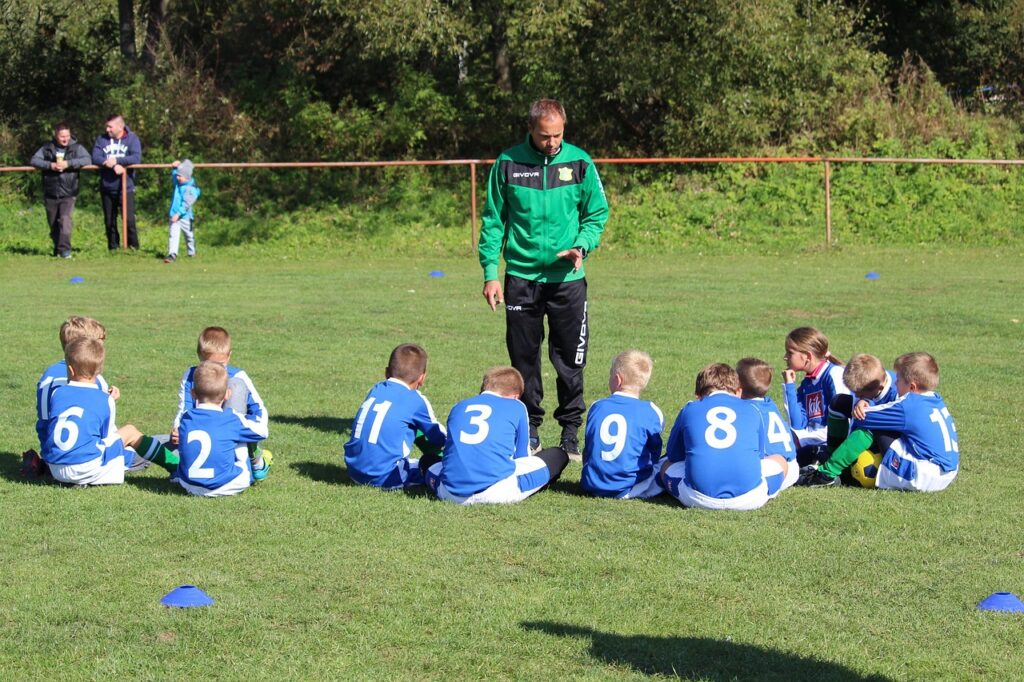

Are football tactics something you struggle to understand, or do you find yourself wondering how some teams seem to outmaneuver their opponents with ease? Choosing the right approach matters because it can be the difference between winning and losing, and it all starts with a solid grasp of the fundamentals – including formations (the arrangement of players on the field), strategies (long-term plans), and player roles (specific positions and responsibilities). Understanding these concepts is key to appreciating the game and making informed decisions on the field. Whether you are a player, a coach, or simply a fan, having a good grasp of football tactics can enhance your enjoyment and participation in the sport. As the game continues to evolve, staying informed about the latest developments and trends in tactics is essential for staying ahead of the curve.
📝 What You'll Learn
Understanding Football Tactics
Before diving into the various tactics employed in football, it’s essential to understand some key concepts. Formations, for instance, refer to the way players are arranged on the field – this can include defensive-minded setups like the 4-4-2 (four defenders, four midfielders, and two forwards), or more attacking formations such as the 4-3-3 (four defenders, three midfielders, and three forwards). Strategies, on the other hand, involve the broader plans and philosophies that guide a team’s approach to the game, such as focusing on quick counter-attacks or maintaining possession to wear down opponents. Player roles, including defenders (who help protect the goal), midfielders (who support both defense and offense), and forwards (who score goals), are also critical components of a team’s tactical setup. To evaluate these tactics, consider key metrics such as possession percentage (the amount of time a team has the ball), passing accuracy (how often players complete passes), and shots on goal (attempts to score).
One of the most important aspects of football tactics is adaptability – the ability to adjust strategies based on the strengths and weaknesses of both your team and your opponents. This might involve changing formations during a game, substituting players to bring in fresh legs or different skill sets, or altering the team’s overall approach to exploit vulnerabilities in the opposing team’s defense. Understanding the basics of football tactics, including common formations and strategies, is crucial for making informed decisions about how to adapt and improve your team’s performance. The following table highlights some key metrics to consider when evaluating football tactics:
| Metric | Description | Importance |
|---|---|---|
| Possession Percentage | The amount of time a team has the ball | High – indicates control of the game |
| Passing Accuracy | How often players complete passes | Medium – affects team’s ability to maintain possession |
| Shots on Goal | Attempts to score | High – directly impacts scoring chances |
| Tackles Won | Number of times a team gains possession through tackles | Medium – indicates defensive aggressiveness |
Football Tactics Methods Worth Knowing
1. The 4-4-2 Formation
The 4-4-2 formation is a classic setup that involves four defenders, four midfielders, and two forwards. This formation is often favored for its defensive solidity and ability to quickly transition into counter-attacks. It is particularly effective against teams that dominate possession, as it allows for a quick turnaround and exploit the opponent’s advanced positions.
- Why It Works:
- Provides a strong defensive base with four defenders
- Allows for quick counter-attacks with two forwards
- Can be adapted to suit different player skill sets and opponent strategies
- Hurdles to Overcome:
- Can be vulnerable to teams that play with wide midfielders or wingbacks
- May struggle to maintain possession against teams with a strong midfield presence
Best for: Teams looking for a balanced approach between defense and offense, particularly those facing possession-based opponents.
2. The Tiki-Taka Strategy
Tiki-taka is a possession-based strategy that emphasizes short passing and movement to maintain control of the ball. This approach requires high levels of technical skill and fitness from players, as well as a deep understanding of spatial awareness and teamwork. Tiki-taka is designed to wear down opponents by denying them possession and creating scoring opportunities through sustained attacks.
- Why It Works:
- Allows teams to dominate possession and control the tempo of the game
- Creates scoring opportunities through sustained pressure on the opponent’s defense
- Can be highly effective in wearing down opponents physically and mentally
- Hurdles to Overcome:
- Requires highly skilled and fit players to execute effectively
- Can be vulnerable to quick counter-attacks if possession is lost
Best for: Teams with technically gifted players and a strong team ethos, looking to dominate possession and control the game.
3. The Counter-Pressing Strategy
Counter-pressing involves pressuring the opponent immediately after losing possession, with the aim of winning the ball back quickly and launching a counter-attack. This strategy requires a high level of fitness and coordination among players, as well as an understanding of when to press and when to drop back. Counter-pressing can be highly effective in disrupting opponents’ attacks and creating scoring opportunities.
- Why It Works:
- Allows teams to quickly win back possession and launch counter-attacks
- Can disrupt opponents’ attacks and create uncertainty
- Requires a high level of fitness and coordination among players
- Hurdles to Overcome: see what this offers
- Can be physically demanding and require a high level of fitness
- May leave teams vulnerable to counter-attacks if the press is bypassed
Best for: Teams looking to exploit opponents’ weaknesses and create scoring opportunities through quick transitions.
4. The Wingback Strategy
The wingback strategy involves using wide midfielders or defenders to support both the defense and the attack. Wingbacks provide width to the team, allowing for stretching of the opponent’s defense and creation of opportunities for crosses and overlaps. This strategy requires players with the stamina to cover large areas of the field and the technical ability to deliver high-quality crosses.
- Why It Works:
- Provides width and stretches the opponent’s defense
- Creates opportunities for crosses and overlaps
- Can be highly effective in exploiting opponents’ weaknesses on the flanks
- Hurdles to Overcome:
- Requires players with high levels of stamina and technical ability
- Can leave teams vulnerable to attacks down the center if wingbacks are caught out of position
Best for: Teams looking to exploit opponents’ weaknesses on the flanks and create scoring opportunities through width and crosses.
5. The Target Man Strategy
The target man strategy involves using a physical presence up front to hold up the ball and bring others into play. This approach requires a strong, technical player who can win headers, hold off defenders, and distribute the ball effectively to teammates. The target man strategy can be highly effective in relieving pressure and creating scoring opportunities through knock-downs and layoffs.
- Why It Works:
- Provides a focal point for attacks and allows for quick transitions
- Can relieve pressure on the defense by holding up the ball
- Creates opportunities for knock-downs and layoffs to other attackers
- Hurdles to Overcome:
- Requires a strong, technical player to fulfill the target man role
- Can be predictable and easy to defend against if not combined with other tactics
Best for: Teams looking to relieve pressure on their defense and create scoring opportunities through a physical presence up front.
| Option | Best For | Difficulty | Cost | Speed |
|---|---|---|---|---|
| 4-4-2 Formation | Teams facing possession-based opponents | Medium | Low | Fast |
| Tiki-Taka Strategy | Teams with technically gifted players | High | Medium | Slow |
| Counter-Pressing Strategy | Teams looking to exploit opponents’ weaknesses | High | Medium | Fast |
| Wingback Strategy | Teams looking to exploit opponents’ weaknesses on the flanks | Medium | Low | Fast |
| Target Man Strategy | Teams looking to relieve pressure on their defense | |||
| Medium | Low | Slow |
How to Choose the Right One
Choosing the right football tactic involves considering several key factors, including the strengths and weaknesses of your team, the opponent’s strategy, and the game’s conditions. Team strengths and weaknesses are crucial, as they dictate what tactics can be effectively implemented. For example, a team with technically gifted players may be well-suited to a possession-based strategy like tiki-taka, while a team with pacey forwards may prefer a more direct approach. The opponent’s strategy is also important, as it can influence the choice of tactics. For instance, a team facing an opponent that plays with a high defensive line may look to exploit this with quick counter-attacks. Game conditions, such as weather and field quality, can also impact the choice of tactics. A muddy field, for example, may favor a more direct approach to avoid the difficulties of maintaining possession on a slippery surface.
In addition to these factors, the players’ skills and fitness levels must be considered. Tactics that require high levels of technical skill, such as tiki-taka, or those that demand a lot of physical effort, like counter-pressing, need players who can execute these strategies effectively. Adaptability is also key, as the ability to adjust tactics during a game can be crucial in responding to the opponent’s strategy and exploiting weaknesses as they become apparent. Finally, coaching and teamwork play a significant role, as a well-coordinated team with a clear understanding of the tactics and their roles within them is more likely to succeed. fitness levels must
The decision-making process involves weighing these factors against each other and considering how they interact. For example, a team with strong defensive capabilities but weaker attacking options might opt for a more defensive-minded tactic like the 4-4-2, especially if facing an opponent known for their attacking prowess. Conversely, a team with a potent attack but defensive vulnerabilities might choose a tactic that emphasizes quick transitions and catching the opponent off guard, such as counter-pressing.
Ultimately, the right tactic is one that maximizes a team’s strengths while minimizing its weaknesses, all while taking into account the opponent’s likely approach and any external factors that could influence the game. This requires a deep understanding of football tactics, the ability to read the game, and the flexibility to adjust plans as the situation demands. By considering these elements and making informed decisions, teams can enhance their performance and achieve their goals.
Why This Matters to You
Understanding football tactics is not just about enjoying the game more; it’s about being able to appreciate the strategy and skill that goes into each match. By learning about different formations, strategies, and player roles, fans can gain a deeper insight into what makes their favorite team tick and how they can improve. This knowledge also allows for more nuanced discussions about the game, enabling fans to analyze performances and suggest potential tactical adjustments that could make a difference.
For players and coaches, mastering football tactics is essential for success. It allows them to prepare effectively for games, to adjust their approach based on the opponent, and to develop strategies that play to their strengths. Understanding tactics also enables players to improve their skills, as they can focus on developing the specific abilities required for their role within the team’s tactical setup.
In terms of community engagement, football tactics can bring people together. Discussing the merits of different formations or debating the best way to counter a particular opponent can foster a sense of camaraderie among fans. This shared interest in the tactical side of the game can also lead to a greater appreciation for the sport as a whole, as fans begin to see the complexity and depth that underlies each match.
The study of football tactics can also have educational benefits. It requires analysis, critical thinking, and problem-solving, all of which are valuable skills that can be applied in many areas of life. Furthermore, the strategic aspect of football can teach important lessons about teamwork, discipline, and adaptability, making it a rich field of study for those interested in sports, strategy, or simply personal development.
Lastly, the tactical side of football is constantly evolving, with new strategies and innovations emerging as the game progresses. This means that there’s always something new to learn, making the study of football tactics a lifelong pursuit that can remain engaging and challenging over time.
The tactical aspect of football also has a significant impact on the emotional experience of the game. A well-executed tactic can lead to a beautiful goal or a memorable victory, creating moments of joy and excitement for fans. Conversely, a poorly chosen tactic can result in defeat, highlighting the importance of tactical decisions in the outcome of matches.
Closing Thoughts
Mastering football tactics is a multifaceted challenge that involves understanding formations, strategies, and player roles, as well as being able to adapt and adjust based on the situation. By considering the strengths and weaknesses of their team, the opponent’s strategy, and various external factors, teams can choose the right tactic to achieve success. The study and application of football tactics are not just about winning games; they are about appreciating the depth and complexity of the sport, fostering community engagement, and developing valuable skills that can be applied beyond the football field. Ultimately, the tactical side of football is what makes the game so engaging and rewarding for players, coaches, and fans alike, offering a rich and dynamic field of study and practice that continues to evolve with the sport itself.
The evolution of football tactics is an ongoing process, with new strategies and innovations continually emerging. As the game advances, so too does our understanding of what makes a successful tactic, reflecting changes in player skills, coaching philosophies, and technological advancements. This dynamic nature of football tactics ensures that the sport remains exciting and unpredictable, with each match presenting a unique challenge and opportunity for tactical innovation.
To wrap up, the world of football tactics is vast and complex, offering a wealth of knowledge and strategy for those who look at it. Whether as a fan looking to enhance your enjoyment of the game, a player seeking to improve your skills, or a coach aiming to outmaneuver your opponents, understanding football tactics is key to unlocking the full potential of the sport. By embracing this aspect of football, individuals can deepen their connection to the game, develop valuable skills, and contribute to the ongoing evolution of football tactics.